

Quick Answer: Your vehicle creates predictable patterns – parking lots, breakdowns, and road conflicts are all moments when your guard is down and your vulnerability is up. Staying safe means treating these situations with the same calm, deliberate awareness you’d bring to any safety drill. Know the risks, have a plan, and trust your instincts when something feels wrong. Here are the Personal Safety Rules Every Driver Needs…
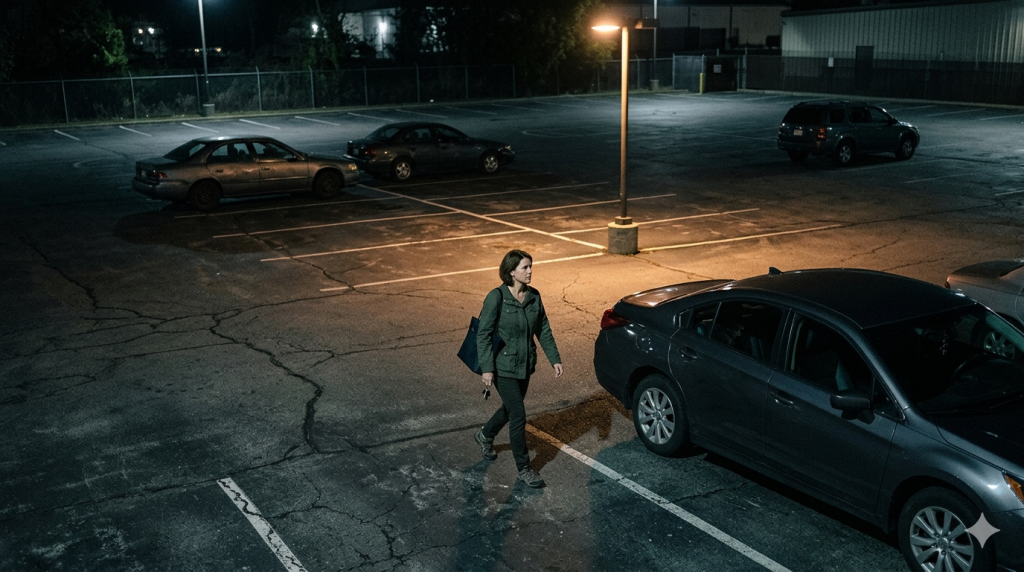
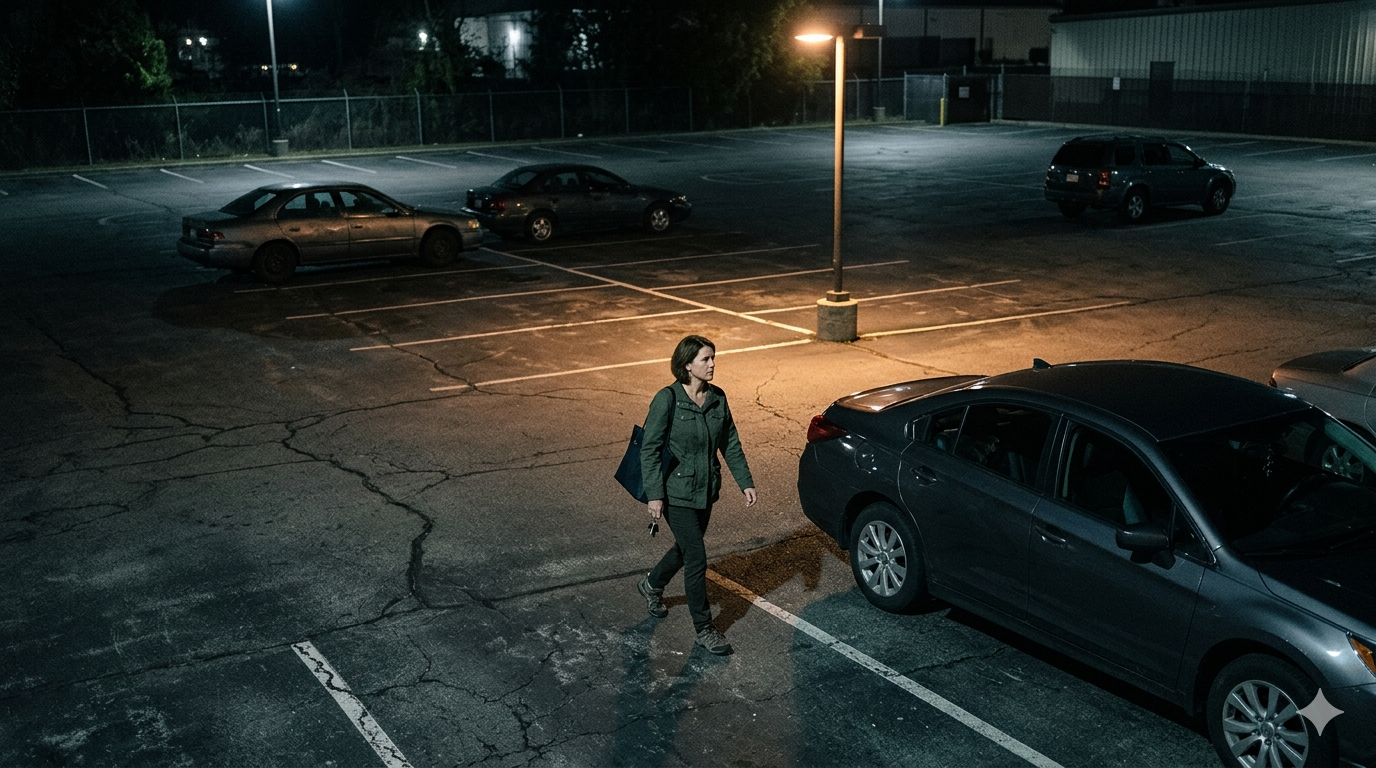
Parking lots are one of the most consistently dangerous environments most of us move through every single day. Yet we treat them like extensions of the store – heads down, keys in hand, thinking about the grocery list. That distraction is exactly what a predator counts on.
According to the Bureau of Justice Statistics, a significant percentage of violent crimes and property crimes occur in parking lots and garages. These spaces offer predators exactly what they’re looking for: limited visibility, poor lighting, momentary distraction, and a victim who is either loading bags into a car or fumbling for keys. You’re stationary. You’re occupied. And you’re alone.
Here’s a simple checklist for parking lot safety that could genuinely make a difference:
Returning to your vehicle deserves the same attention. Glance underneath your car as you approach. Check the back seat before you get in. These habits take about three seconds each. They’re worth every one of them.
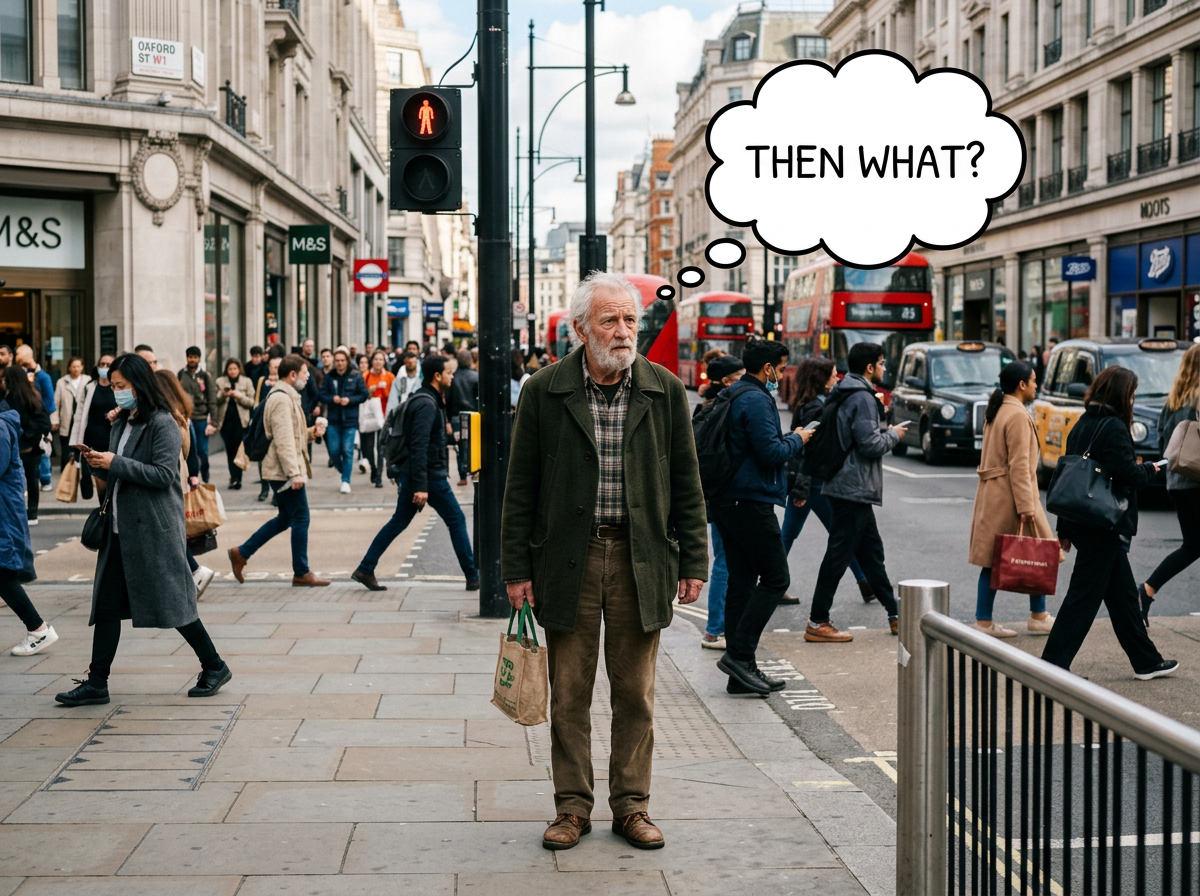
Road rage is genuinely dangerous – and stopping to confront another driver is one of the most avoidable mistakes you can make. This isn’t about ego or who was right. It’s about recognizing that a two-lane dispute can turn fatal in seconds.
Everytown for Gun Safety has tracked hundreds of road rage incidents involving firearms in recent years. In many cases, what started as a merge dispute or a tailgating conflict ended with someone shooting. The person who “started it” and the person who “reacted” often both suffered serious consequences.
Here’s what you need to understand: you don’t know who is in that other vehicle. You don’t know their mental state, their history, or what they’re carrying. The driver who cut you off may be someone who is completely unhinged and looking for a reason to escalate. Getting out of your car to confront that person is not assertiveness – it’s an unnecessary gamble with your safety.
What to do instead:
That’s not something to feel embarrassed about. That’s something to calmly decide in advance, before emotion takes over in the moment.
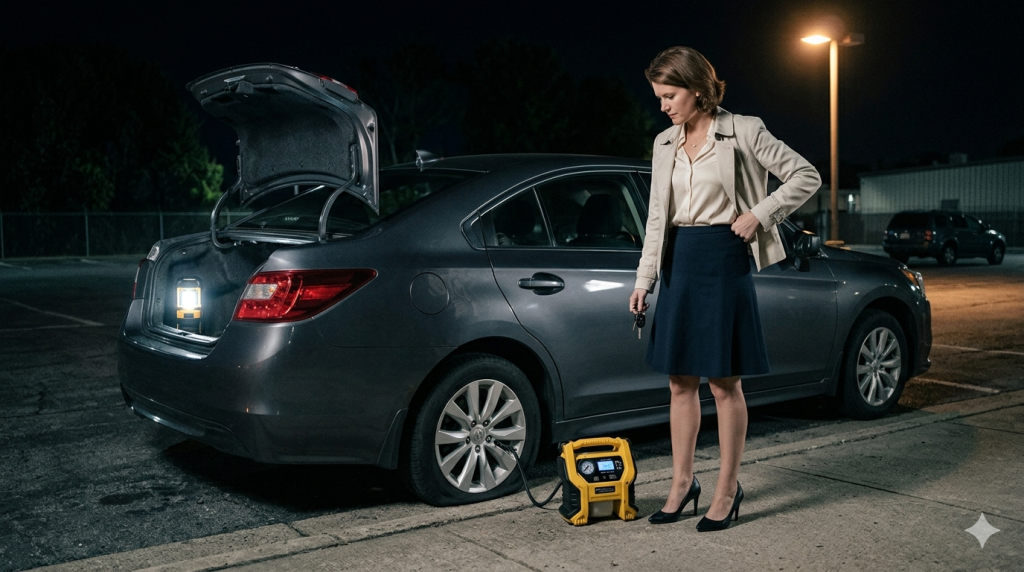
A breakdown on a dark, deserted road is more than an inconvenience – it’s a vulnerability window. You’re stopped. You’re stressed. You may be alone. And you may not know exactly where you are. That’s a combination that demands a clear, pre-planned response.
The single best prevention is also the most obvious: keep your vehicle in good working order. Regular maintenance – checking tire pressure, fluid levels, belts, and battery – dramatically reduces the odds of an unexpected breakdown. Make vehicle maintenance a habit, not an afterthought.
One practical tool worth keeping in your glove box or center console is a compact portable tire inflator – the kind that plugs directly into your 12-volt dash outlet. If you pick up a slow leak from a nail or road debris, these small inflators can buy you exactly what you need: enough pressure to get off a dark, isolated road and reach a gas station, truck stop, or well-lit public area. They’re inexpensive, take up almost no space, and could genuinely be the difference between a minor annoyance and a dangerous situation.
If you do break down and can’t avoid stopping, follow this protocol:
This one is hard to say, because most people who stop to help genuinely mean well. But not all of them do – and you have no way of knowing which type has just pulled up behind your disabled vehicle.
Predators sometimes use the “good samaritan” approach deliberately. A stranded driver is an ideal target: isolated, distracted, possibly frightened, and inclined to accept help from whoever offers it. Some criminals have used this method specifically to get close enough to a potential victim before the situation turns dangerous.
That doesn’t mean you should refuse help with hostility. It means you should accept help on your terms, from behind a locked door:
You are allowed to be cautious. Politeness is not worth your safety.
This is a scenario most drivers have never considered – and that’s exactly why it works as a tactic. It’s sometimes called the “bump and rob” or “bump and carjack” method. Someone rear-ends your vehicle deliberately, counting on you to pull over, get out, and approach their car to exchange information. At that point, you’re exposed and vulnerable.
If you’re in a well-lit area with plenty of people around, a minor bump is almost certainly just an accident. Use your judgment. But if it happens on a dark, deserted road – especially late at night – your first instinct should be skepticism, not compliance.
Here’s the step-by-step approach for this specific situation:
Some people worry about appearing rude or overreacting. Here’s the thing – if it was a genuine accident, the other driver will understand once you explain the situation to a police officer. If it wasn’t a genuine accident, you just made exactly the right call.
Keeping a personal safety tool accessible in your vehicle is a sensible precaution – the same way you keep a spare tire and a first aid kit. The goal isn’t to turn your commute into a tactical operation. It’s to avoid being completely defenseless if something goes sideways.
A few practical options worth considering:
None of these tools replace awareness and a clear plan. But having the right tool at hand, when you need it, matters.
Generally, yes – leaving the scene of an accident without stopping is illegal. However, if you genuinely fear for your safety, driving to a populated, well-lit location before stopping is a defensible action, especially if you’re simultaneously on the phone with 911 explaining what you’re doing and why. Document everything and cooperate fully with police once they arrive.
Make four consecutive right turns – essentially a full circle around the block. If the same vehicle is still behind you, that’s a strong indicator. Don’t drive home. Head toward a police station or busy public location. Keep 911 on the line. You’re not being paranoid – you’re being practical.
Absolutely. A 12-volt plug-in tire inflator costs around $30 to $60, fits in a small bag, and can reinflate a tire with a slow leak enough to get you off an isolated road. That’s a meaningful safety upgrade for a modest investment. Pair it with a can of tire sealant for added backup in case of a larger puncture.
Pepper spray is a widely recommended, non-lethal self-defense option that’s legal in most U.S. states with some age and formulation restrictions. Keeping a canister accessible in your vehicle – not locked in the glove box, but within reach – gives you a practical option if someone approaches your car aggressively. Check your state’s specific laws before purchasing.
Maybe, but probably not. To maintain its effectiveness, pepper spray needs to be stored in a cool place. You don’t want your pepper spray canister exposed to extreme heat or cold. While it may be alright to leave your pepper spray in the car during the mild days of spring and fall, it would likely be too hot or cold in the car during the extremes of summer and winter. Read and follow the manufacturer’s instructions on storage and temperatures. The bottom line is that it’s best to store the canister at room temperature, carry your pepper spray with you daily and keep it in a regular spot, somewhere that’s easy to reach when you need it.
Go back inside. It’s that simple. Re-enter the store, restaurant, or building and ask an employee or security guard to escort you to your vehicle. There is no social awkwardness worth trading for your personal safety. Most businesses will accommodate this request without hesitation. Trust your instincts – they exist for a reason.
Research and law enforcement experience consistently show that predators look for opportunity and distraction – someone whose attention is divided, who appears unaware of their surroundings, or who is isolated. Simply being alert and scanning your environment makes you a less appealing target. Awareness is your first and most powerful layer of defense.
A practical vehicle safety kit includes: a charged phone or backup battery, pepper spray within reach, a personal alarm, a flashlight, a window breaker and seatbelt cutter tool, a portable tire inflator, and a basic first aid kit. None of these items are excessive – they’re the vehicle equivalent of a smoke detector. Sensible preparation, not paranoia.
Both, according to researchers. Everytown for Gun Safety data suggests road rage incidents involving firearms have increased significantly over the past decade. But media coverage amplifies individual incidents dramatically. The practical takeaway: road rage is real, it has become more dangerous, and the correct response – disengaging completely – hasn’t changed. Don’t engage. Just drive away.
Your car gives you freedom, mobility, and convenience. It also creates predictable patterns – where you park, when you get out, how you respond to problems on the road – that can be anticipated and exploited if you’re not paying attention.
None of this is reason to live in fear. It’s reason to think clearly and prepare calmly. Keep your vehicle maintained. Carry a portable inflator for slow leaks. Know what to do if someone bumps you on a dark road. Stay in your car when something feels wrong. And carry a personal safety tool that you actually know how to use.
The goal isn’t to turn every drive into a threat assessment exercise. It’s to have a plan already in place so that when something unexpected happens – and eventually, something will – you respond with confidence rather than panic. That preparation is what keeps a bad moment from becoming a dangerous one.