

Guide to Understanding Stun Guns
What are Stun Guns? Stun guns, classified by the National Institute of Justice (NIJ) as Conducted Energy Devices (CEDs), are personal protection tools that deliver a high-voltage, low-power charge of electricity. This charge induces involuntary muscle contractions, causing temporary incapacitation of the target.
How Do Stun Guns Work?
- Mechanism: Stun guns send electrical pulses through two electrodes that create a high voltage difference. When an attacker comes into contact, the electricity travels through their body, affecting the nervous system.
- Effects of Shock:
- 0.5 seconds: Minor muscle contractions and pain, creating a startling effect.
- 1-2 seconds: Muscle spasms, causing the attacker to fall and leading to confusion.
- 3 or more seconds: Full immobilization, disorientation, loss of balance, and weakness. The NIJ recommends limiting exposure to no more than 15 seconds.
Understanding Voltage and Amperage
- Voltage: The electric potential or “pressure” at which electricity flows, facilitating the movement of electrons through the circuit and measured in volts. A higher voltage helps to push the amperage through even thicker clothing to deliver a debilitating shock to an attacker.
- Amperage: According to Howstuffworks.com “Amperage is another way to measure the amount of electricity running through a circuit. Amperage is the ‘rate’ that current is flowing through the circuit or the number of electrons moving through the wire.” Amperage is the electrical current that flows through the attacker’s body disrupting muscle function and quickly immobilizing him.
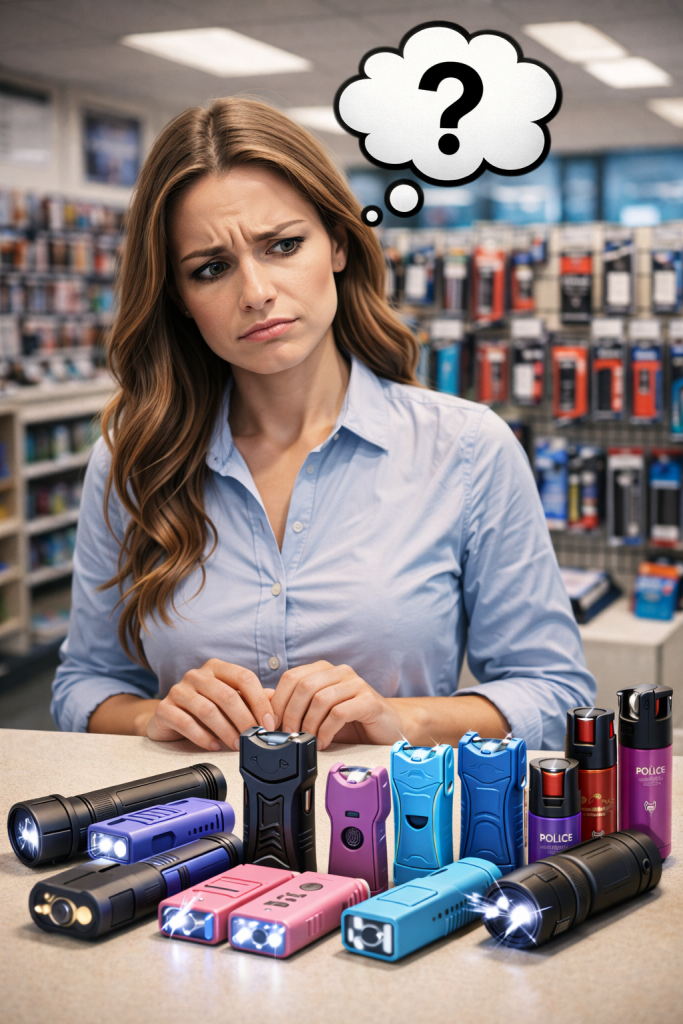
Choosing the Right Stun Gun
The first thing to consider is whether or not you can legally own a stun gun where you live. Stun guns are generally legal to use for self defense purposes, but there are some state and local laws and restrictions you should be aware of. The best advice is to check with your attorney or contact a supervisor through your police non-emergency number. If you can legally purchase and possess a stun gun, here are some things to consider when shopping for a stun gun.
- Portability: Select a stun gun that you can easily carry, like those attached to keychains, bags, belts.
- Features: Some stun guns come with a built-in flashlight; some have an alarm; others have a wrist strap and disable pin (to render the device useless if snatched from your hand by an attacker).
- Lifestyle Considerations: Some stun guns are built into everyday items like flashlights, walking sticks and canes which can be held while walking outside and exposed to potential danger. There are also stun guns that are disguised – designed to look like everyday items (cell phone, lipstick, hair brush, etc.). These stun guns are made to blend in, so people won’t ever notice them.
- Personality: Stun guns come in various shapes, sizes and colors. There’s a design to fit any personality. If you don’t care who knows you have a stun gun, a pink or purple model may just be for you.
Find the stun gun that would best fit your lifestyle. The best stun gun for you will be the one you can and will carry with you every day. The best stun is worthless if you don’t have it with you, within easy reach and ready to go when you really need it!
Safety Considerations
- Duration of Exposure: As mentioned above, he NIJ recommends limiting the discharge to no more than 15 seconds.
- Only use Stun guns for self defense purposes.
- Never use stun guns on children, pregnant women, the elderly, or those those known to have serious health conditions.
- Usage Effectiveness: Healthy attackers are generally capable of surviving brief exposure, allowing victims an opportunity to Escape Unharmed. Non-lethal tools like stun guns help reduce potential of serious injuries to both parties.
- Familiarization: Learn how to operate your stun gun effectively, including understanding its safety mechanisms. Practice using it at home. Some stun guns have built-in flashlights. In an emergency, you won’t want to press the flashlight button when you’re trying to deploy the stun. Learn to use the device by feel. In a stressful situation you won’t have time to fumble with it. You’ll want to be able to find and press the correct button when you really need to. Also, get familiar with the safety features of your stun gun. Some have mechanisms to prevent accidental discharge; some have a feature to prevent the device from being used against you if it should be snatched out of your hand.
You Bought a Stun Gun – Now What?
- Read the instructions. Look at the device and familiarize yourself with the buttons
- Battery Charge: Ensure the device is fully charged. A low battery can result in ineffective performance. Follow the manufacturer’s guidelines for maintenance.
- Regularly check your stun gun for damage. If you normally keep the device in your pocket or purse, it could possibly suffer damage that would negatively impact performance. Deploy the stun gun occasionally to make sure it’s still functioning normally.
- Carry your stun gun with you.
Show Time – Light Him Up!
You’ve practiced with your stun device; you keep it fully charged and in good working order. Now, out of nowhere a bad guy grabs you and you have to urgently deploy it. Where do you aim to get the best result? Of course stun guns differ from pepper spray in that they are for close quarters combat. To disable your attacker with a stun gun, you need to press it against his body and issue a shock. Ideally, according to manufacturers, the best places are the spots with lots of muscles. Since stun guns cause muscle spasms, the best place to zap the bad guy would be in the muscles. Areas to look at are the chest and back. If those areas aren’t available to you, the thighs would also work well. If possible avoid aiming for –
- Heavy Clothing
- Body Fat
- Face
- Neck
- Groin
In an ideal scenario you’d face an attacker in shorts and a tee shirt and you’d have several good spots to deploy the stun gun. In the real world, attackers may be morbidly obese or wearing heavy clothing that keeps you from effectively reaching muscle. You may be forced to aim for one of the less desirable areas. If you’re fighting for your life, deploy the stun gun anywhere you can. Press it firmly against the attacker’s body and hold it there until the full shock has been delivered. Remember, immobilization should come in about 3 seconds or so if you’re making good contact. You should see and feel the attacker’s loss of muscle control. If the shock isn’t working in one spot, quickly find a different area. When he goes down, get to safety and get help.
Final Thoughts: Stun guns can be highly effective personal protection tools when properly maintained and used correctly. Understanding the science behind their operation, safety guidelines, and practical considerations are essential in ensuring preparedness in potential self-defense situations. Always adhere to legal regulations in your area regarding ownership and use of stun guns.